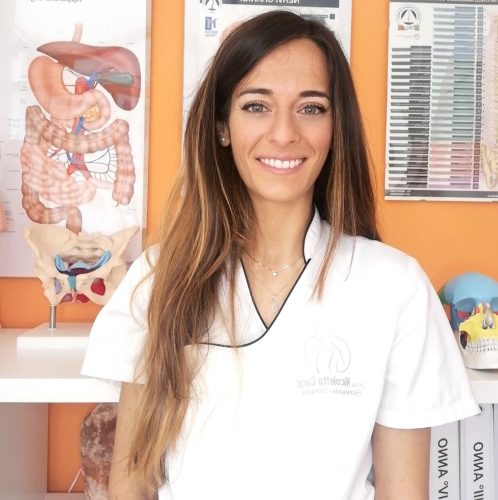
When people talk about vulvodinia they tend to immediately think of a problem located in the intimate area. “This is not always the case,” explains Nicoletta Carai, a physiotherapist and osteopath, pelvic floor rehabilitator specializing in women’s intimate health and pelvic pain. “There are many indirect causes that can affect pelvic floor function and contribute to the onset of pain. This is why it is a good idea, as soon as the first symptoms appear, to contact a specialized professional. It is essential to understand how long the pain has been present, whether it started as a result of an event, whether it is unilateral or bilateral, and whether it appears spontaneously or is caused by something (for example, by tight clothing or as a result of sexual intercourse). From the history, we can gather information that helps identify the true cause of the disorder.”
Lesser-known causes
Vulvodynia and bowel
One of themost frequent “unusual” causes of vulvodinia is bowel dysfunction. In an online survey of 1250 women in the United States, it was found that women with bowel alterations have a higher prevalence of vulvovaginal complaints, compared to others. “Gut and vagina share a close relationship,” she confirms. “The intestinal bacterial flora is strongly related to the vaginal flora.
Gut inflammation can disrupt the balance of vaginal flora, change mucous membranes and promote the appearance of pain. In addition, bowel dysfunction can result in altered alvus, for example, constipation, which can be a cause or consequence of pelvic floor hypertone, that is, a condition in which the pelvic muscles are excessively contracted. Recall that some pelvic muscles are intimately related to the rectum.
In general, increased pelvic floor muscle tension (ipertono pelvico) is one of the causes of tissue ischemia, that is, a reduction in vascularity and oxygenation of the area, which further fuels inflammation and pain.”
Vulvodynia and posture
Postural changes can also affect the pelvic floor and be among the causes of vulvar pain: the pelvic floor muscles work in synergy with the postural muscles of the spine, abdomen, and diaphragm to maintain good postural balance. Dr. Carai explains, “If one of these muscle districts is not functioning properly, such as if there is hypotonic (decreased tone) in the abdomen, the pelvic floor can compensate by increasing its contraction. Over time this can change the muscle tone of the pelvic area and contribute to pain, leading to a vicious cycle.”
Vulvodynia and sacrum
Another of the distant causes of vulvodinia is blockage of the sacrum. “The uterus is connected to the sacrum via the utero-sacral ligaments: if the sacrum is poorly mobile or in dysfunction, it can exert traction on the uterus,” Carai says. “Any stimulation of the uterus, for example during penetrative intercourse or during menstruation, can generate pain and thus local inflammation. This, in turn, can provoke a defensive reaction of the pelvic musculature, which contracts further fueling inflammation.”
The role of physiotherapy
vulvodinia always requires a multidisciplinary approach: the goal is to create a pathway that takes into account both local and distant causes. In this context, the physiotherapist specializing in pelvic floor rehabilitation can be an important figure: he assesses muscle tone, function, the presence of hypertonus or hypotone, any postural compensations, and sets up a personalized program. “The goal is to obtain a toned but elastic musculature, capable of contracting and relaxing in a physiological way,” the expert explains. Overly contracted muscles can promote vascular congestion and reduced tissue oxygenation (ischemia), conditions that fuel the inflammatory state and can contribute to problems such as vulvodinia.
The next step is reeducation to work in synergy with the abdomino-lumbopelvic complex. The abdominals, diaphragm, and muscles of the spine work together with the pelvic floor to provide stability, posture, and proper management of internal pressures. After a prolonged period of dysfunction, the pelvic floor tends to “revert” to old motor habits, so it is necessary to teach a correct movement pattern again.
The physical therapist shows the woman targeted exercises in core stability, breathing, motor control and conscious movement so that she learns to use all the structures involved harmoniously. The goal is to make the person with vulvodinia an active part of her own recovery, providing her with the tools to independently maintain good muscle tone and stable function over time.”
More causes, more specialists
There is no universally valid protocol for vulvodinia, applicable to all people. In addition to pelvic floor rehabilitation, the correct approach involves an intervention that considers all causes:
1) a possible modification of the eating style, including with the support of a nutritionist, especially when bowel disorders are present
2) the improvement of posture through physiotherapy and the mobility of pelvic-related structures withosteopathy: the osteopath can intervene on all those structures, such as the pelvis, column, diaphragm, vagus nerve, and sacrum, whose function directly or indirectly affects the pelvic floor; restoring the mobility of these areas can reduce tension, compensations, and mechanisms that feed pain
3) gynecological support to restore vaginal mucosal health and treat any associated conditions.