Is healing from vulvodinia possible? In this interview, Professor Ernesto Di Pietro, osteopath and Lecturer in Clinical Biomechanics at the Graduate Course in Osteopathy, Vita-Salute San Raffaele University of Milan, explains howthrough medical biomechanics he has managed to first trace and then eliminate the causes of chronic intimate pain in dozens and dozens of patients. Thus, not a symptomatic treatment, but an approach that aims to remove the very origin of the problem. An integrated and multidisciplinary vision that opens up new scenarios for those who are still searching for a real chance of healing. Here you can read the testimonial of Ilaria, a patient of Prof. Di Pietro, who was freed from pain for good.
Professor Di Pietro, can you explain what the biomechanics approach consists of and how it differs from the standard treatment of vulvodinia?
Medical biomechanics takes an “upstream” approach: instead of simply suppressing symptoms, it seeks to identify and correct the mechanical cause that generates pain by analyzing the forces and tensions present in the body. In conventional treatment of vulvodinia, unfortunately, we almost always talk about symptom management or suppression (drugs, infiltrations, pelvic physiotherapy), but rarely about complete healing. For the patient, eliminating the pain is already a great relief, but from my point of view it is not enough if the cause remains.
How did you first come into contact with vulvodinia?
Initially, I knew practically nothing about this condition: I had heard about it but had never treated a patient. One day a gynecologist I knew asked me to examine a young woman who was literally in despair: the pain was such that she would not leave the house and could not even sit up. I accepted the challenge.
What was your path in reasoning that led you to a completely different view of the disease?
I started by studying the innervation of the vulvar and perineal region. The pudendal nerve, which is primarily responsible for sensitivity and pain in that area, originates from the sacral plexus. It was already known in the literature that a deviation or twisting of the coccyx can compress or irritate the pudendal nerve. So this pathway was not leading me to anything new. As I delved further, however, I noticed that almost all the cases I was studying had abdominal bloating, often related to intestinal dysbiosis. But the bloating in turn interferes with the diaphragm becoming rigid and unable to move properly. At this point the question becomes: why is the diaphragm not working properly? The answer takes us much higher….
The which way?
The diaphragm is innervated mainly by the phrenic nerve (which originates in the C4-C5 vertebrae) and the vagus nerve, which runs closely to the high cervical structures, particularly C1, the first vertical vertebra called the atlas. At this point I began to check the cervical spine of the patients and found that all, without exception, had a misaligned atlas relative to the axis of the spine, a past history of orthodontic treatment, and occlusal problems and/or malposition of wisdom teeth.
So going back along the various body structures, did you discover the link between vulvodinia to a problem of cervical and odontostomatognathic origin?
Exactly. The common thread is mechanical and neurological: high craniocervical dysfunction (which may be secondary to trauma, poor posture, or abnormal occlusal forces prolonged over time) alters the tone of the diaphragm and pelvic floor via the phrenic nerve and vagus. The result is increased intra-abdominal pressure, chronic irritation of the pudendal nerve and its branches, and thus vulvodinia.
How did it go from theory to clinical practice?
I started manually treating the high cervical spine in particular the atlas. In parallel, in collaboration with atrusted orthodontist (see more below ed.), we evaluated occlusion and tooth malpositioning and, in indicated cases, proceeded to extraction of wisdom teeth (eighths). The results were surprising.
What have been the concrete results over the years?
In about two years of systematic application of this protocol, we have followed dozens and dozens of patients with overt diagnosis of vulvodinia (many of them refractory to all previous treatments). The results: several patients are completely cured with only 2-3 cervical manipulations plus occlusal correction. Others took a few more manipulations; still others are continuing their course but all have had significant or very significant improvement in pain and quality of life. Therefore, today I can say with certainty that it is possible to recover from vulvodinia.
What kind of team have you built around these patients?
It is always a rigorous multidisciplinary work: I take care of the biomechanical and osteopathic part (column, skull, diaphragm); the orthodontist evaluates and corrects the occlusion; the gynecologist who specializes in pelvic pain follows the patient, verifies the clinical progress and gradually scales up the medications. When necessary, the neurologist also intervenes (for neuropathic medications), to which is added the psychotherapist for the psychological part.
So how do you define vulvodinia in your model today?
In our model, vulvodinia arises from a pudendal nerve neuropathy of mechanical origin, sustained by a dysfunctional chain that starts from the cranio-cervical and occlusal district, passes through the diaphragm and reaches the pelvic floor. Correcting the “upstream” segments can cure vulvodinia permanently, not just manage the symptom.

Dr. Eleonora Santoro is thedental surgeon who works as a team with Prof. Ernesto Di Pietro. We asked her a few questions as well.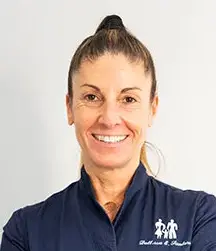
Dr. Santoro, how does the dentist fit into this approach that goes back to the mechanical causes of the problem?
The teeth are also involved in this long chain. Observing patients with vulvodinia, we realized that they had one characteristic in common: they began to feel better when with orthodontic treatments the masticatory load was modified. In their case, instead of being physiologically distributed from the canines to the molars, there was evidence of involvement also at the level of the frontal group, with significant precontact between upper and lower incisors. This situation creates tension at the level of the temporomandibular joint, and thus goes to force the position of the mandible, which remains stuck back and up, a dysfunction that is then reflected at the cervical level
Are wisdom teeth also involved? How?
It depends on a case-by-case basis. The presence of the eighths, especially if there are asymmetries (for example, if there is only one in the lower arch) or tooth crowding, can be a source of tension within the mouth, of forces that can worsen the picture. Each individual situation needs to be evaluated; there is no fixed protocol for all of them
Could it be enough then just to intervene at the dental level?
Absolutely not, it is a team effort, where everyone intervenes in their area of expertise but always in synergy with other professionals. For example, I have observed that when a patient undergoing orthodontic therapy carries out simultaneous spinal biomechanics sessions to release tension at the cervical level, the malocclusion resolves faster
This is a real hope for women who do not know where to turn anymore….
As for my clinical experience, the results observed on treated patients are very satisfactory